Handmade jewelry continues to be one of the most popular categories at craft and vendor markets. While that popularity creates opportunity, it also means jewelry vendors often face strong competition both online and in person.
Creating beautiful jewelry is only part of building a successful handmade business. The vendors who stand out most successfully are usually the ones who develop a clear niche, strong branding, and a memorable customer experience.
If you want your handmade jewelry business to feel more recognizable, professional, and profitable, finding your niche is one of the most important steps you can take.
Why Finding a Jewelry Niche Matters
Customers today have endless shopping options. A niche helps your business feel more specific, memorable, and intentional rather than blending into a crowded market.
A clear niche helps:
- Attract the right customers
- Strengthen branding
- Improve customer loyalty
- Increase repeat business
- Make marketing easier
- Create a more recognizable booth and online presence
Instead of trying to appeal to everyone, successful jewelry brands often focus deeply on a specific audience or aesthetic.
1. Build Around a Specific Style
One of the easiest ways to create a jewelry niche is through style.
Popular jewelry styles include:
- Bohemian
- Vintage
- Minimalist
- Gothic
- Western
- Coastal
- Luxury-inspired
- Nature-inspired
- Celebrity-inspired
- Classic elegance
Choosing a strong style direction helps customers immediately recognize your aesthetic and connect with your brand.
Consistency is often more memorable than variety.
2. Specialize in Certain Jewelry Pieces
Instead of offering every type of jewelry possible, some vendors stand out by focusing heavily on specific products.
Examples include:
- Statement earrings
- Permanent jewelry
- Layered necklaces
- Charm bracelets
- Cuff rings
- Anklets
- Hair jewelry
- Brooches
- Men’s accessories
Specialization can help position your business as more unique and recognizable.
3. Know Your Target Customer
Successful handmade businesses understand exactly who they are designing for.
Consider:
- Age group
- Lifestyle
- Fashion preferences
- Interests
- Shopping habits
- Personal values
For example:
- Eco-conscious shoppers may prefer sustainable materials
- Festival-goers may gravitate toward colorful bohemian styles
- Luxury-focused customers may prefer minimalist gold jewelry
- Wellness-focused shoppers may love crystal or healing-inspired pieces
The clearer your audience, the easier it becomes to market effectively.
4. Use Materials to Define Your Brand
Materials can become a major part of your jewelry identity.
Examples include:
- Crystals
- Sterling silver
- Polymer clay
- Resin
- Leather
- Pearls
- Natural stones
- Beaded designs
- Mixed metals
Using signature materials consistently helps create stronger brand recognition and customer recall.
5. Create a Recognizable Color Story
Color plays a huge role in branding and booth presentation.
Many successful jewelry brands use:
- Neutral palettes
- Bold statement colors
- Earth tones
- Pastels
- Black-and-gold luxury themes
- Coastal blues and whites
Consistent color choices across:
- Packaging
- Displays
- Signage
- Jewelry cards
- Social media
help create a more cohesive and memorable brand experience.
6. Make Your Booth Feel Like Your Brand
At vendor markets, your booth is often your storefront.
Your setup should visually communicate:
- Your niche
- Your style
- Your target customer
- Your product quality
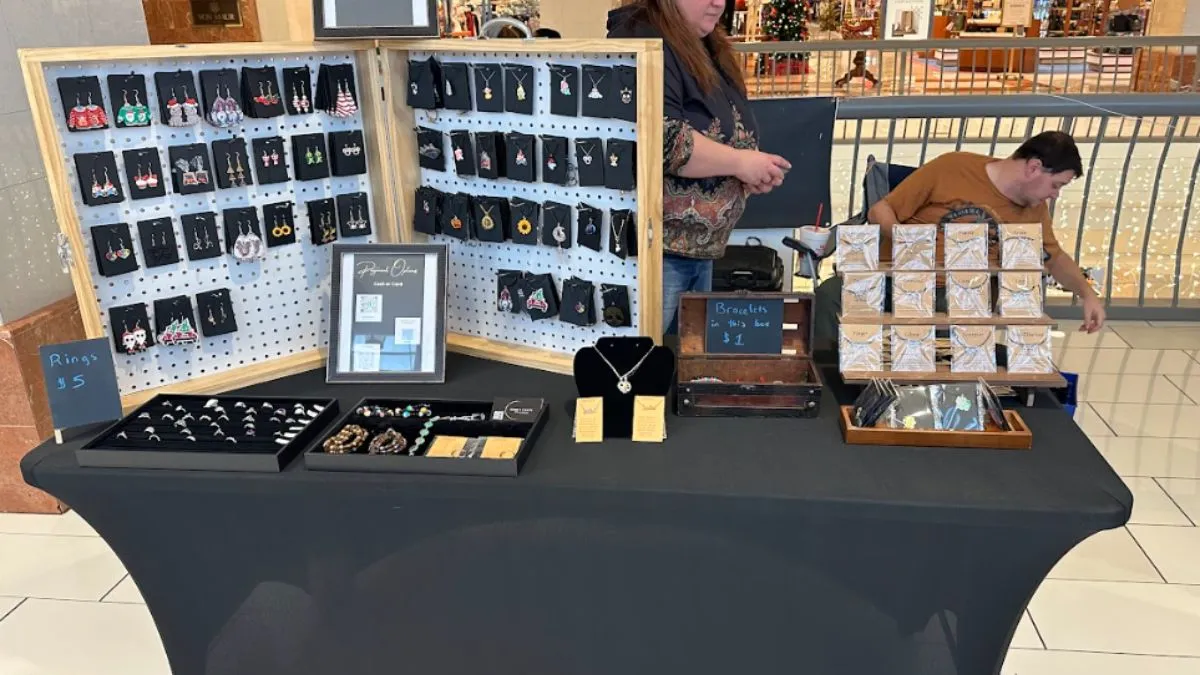
Strong jewelry booths often include:
- Vertical displays
- Clean lighting
- Mirrors
- Layered heights
- Organized product sections
- Clear signage
- Cohesive colors and branding
Jewelry is highly visual, so presentation matters significantly.
7. Build Customer Connection Beyond the Sale
Jewelry customers often become repeat customers when they feel emotionally connected to a brand.
Ways to strengthen customer connection:
- Share the inspiration behind collections
- Explain materials and craftsmanship
- Offer styling suggestions
- Encourage newsletter signups
- Create memorable packaging
- Stay active on social media
Customers who connect with your brand personally are more likely to return and recommend your business.
Booth Essentials
Professional booth presentation plays a major role in customer engagement and overall sales success. We’ve curated a list of Booth Essentials including signage holders, display risers, lighting, table covers, storage solutions, branding accessories, jewelry displays, and booth organization tools to help vendors create polished and professional setups.
Explore the complete Booth Essentials list:
Shop Our Amazon Booth Essentials List
The right setup tools can help improve booth visibility, customer interaction, and overall brand presentation.
Final Thoughts
The handmade jewelry market may be competitive, but vendors who develop a clear niche, strong branding, and thoughtful presentation often create more memorable and successful businesses.
Rather than trying to appeal to everyone, focus on building a jewelry brand that feels intentional, recognizable, and connected to a specific audience.
Strong branding, customer experience, and booth presentation can make a major difference both online and at vendor markets.
For vendor guidance, event preparation support, or questions about upcoming markets, contact info@hometownvendormarket.com. Hometown Vendor Market is committed to helping vendors grow and succeed at every event.